

Federal & White Collar Defense Blog

When Should You Hire a Federal Criminal Defense Lawyer?

concerned businessman receiving federal notice via email

You should hire a federal criminal defense lawyer as soon as you learn you may be under federal investigation. Waiting until federal charges are filed can significantly limit opportunities to protect your rights, respond strategically to investigators, and shape the direction of the case before prosecutors make charging decisions. Whether you receive a federal target letter, grand jury subpoena, search warrant, or contact from federal agents, consulting a lawyer as soon as possible should be your priority.

You Do Not Need to Wait Until Charges Are Filed to Hire a Lawyer

Many assume that the time to hire a federal criminal defense attorney is after an arrest or indictment. In reality, federal criminal cases often begin quietly, without any formal notice that you are the focus, and are built over months or even years, long before charges are filed.


During the pre-indictment stage, federal agencies may collect financial records, review electronic communications, execute search warrants, issue grand jury subpoenas, and conduct witness interviews while working closely with prosecutors from the Department of Justice. By the time you learn you are under federal investigation, the government may already believe it has significant evidence linking you to a federal crime.


Hiring a federal criminal defense attorney early allows you to understand your legal exposure, protect your constitutional rights, and begin developing a defense strategy before the investigation advances further.

Signs You May Need a Federal Criminal Defense Lawyer

Even if you believe the situation is a misunderstanding, these events should always be taken seriously. An experienced criminal defense lawyer can help protect your rights and prevent avoidable mistakes during the investigation.

Subpoena

A subpoena is used to compel information during an investigation. It may require you to submit documents or testify before a federal grand jury. Being served a subpoena does not necessarily mean you will be charged with a crime, but it does indicate that federal prosecutors or investigators are seeking evidence in a matter connected to you. An attorney can help you understand your obligations, preserve your rights, and determine the appropriate response.

Search Warrant

If federal agents execute a search warrant at your home, office, or business, it means that the government has obtained judicial authorization to search for evidence related to a criminal investigation. Search warrants often occur after investigators have spent considerable time gathering information. You should avoid discussing the investigation and contact a federal criminal defense lawyer immediately.

Contact from Federal Agents

Agents from the FBI, Department of Justice, IRS Criminal Investigation, DEA, SEC, HHS-OIG, or Homeland Security Investigations may request an interview or ask questions about an ongoing investigation. Even if agents describe the conversation as informal or suggest you are not a target, you should consult legal counsel before speaking with investigators.

Grand Jury Activity Involving Others 

Sometimes the first indication of a federal investigation is learning that coworkers, business partners, employees, or family members have received subpoenas or been contacted or interviewed by investigators. Although you may not have been contacted directly, these developments can indicate that conduct connected to you or your business is being examined. Early legal guidance can help you understand your position and prepare for potential government contact.

Federal Target Letter

A target letter is different from investigative tools such as subpoenas, search warrants, or witness interviews, which are used to gather evidence during an investigation. It is a formal notice by a United States Attorney’s Office stating that prosecutors consider the recipient the target of a federal criminal investigation. While it is not an indictment, receiving a federal target letter generally means the government believes it has substantial evidence linking you to a crime and is actively evaluating whether to bring charges. If you have received a target letter, seek legal counsel immediately.

What to Do After Contact from Federal Agents

Federal criminal investigations differ significantly from state criminal cases in their scale, the resources dedicated to them, and their structure. They may involve allegations of healthcare fraud, wire fraud, mail fraud, bank fraud, securities fraud, cryptocurrency fraud, tax offenses, money laundering, RICO and conspiracy offenses, cybercrime, drug trafficking, firearms offenses, public corruption, and other federal crimes.


If federal agents contact you:

  • Remain calm and avoid making statements without legal counsel. Even informal conversations can later become part of a federal investigation.
  • Do not attempt to explain the situation or speculate about the facts. 
  • Avoid speaking about the case or your situation with anyone other than your lawyer.  
  • Do not destroy, delete, or alter documents, emails, or electronic records, as this can create additional legal exposure separate from the underlying matter. Preserve all potentially relevant information.
  • Contact a federal criminal defense lawyer immediately. Your attorney can assess the situation, communicate with investigators when appropriate, and help protect your legal position.

hands on a laptop keyboard

Proven Federal Defense in High-Stakes Cases

Tarras Defense focuses on resolving matters before criminal charges are filed. Outcomes have included declined prosecution, dismissed charges, and reduced sentencing. Founded by nationally recognized trial lawyer David Tarras and based in Boca Raton, Florida, our firm has represented clients in white collar and federal criminal defense matters, including:

  • Tax fraud investigation exceeding $10 million in alleged losses—resolved without criminal charges
  • $57 million forex fraud investigation—closed without prosecution
  • $6 million medicare fraud allegation—no charges against the CEO
  • PPP loan fraud and conspiracy case—full dismissal of federal charges
  • $100 million in alleged cryptocurrency fraud—bond secured for foreign national
  • Large scale drug trafficking conspiracy—faced 10-year mandatory minimum and potential life sentence, reduced to 5 years

Protect Your Reputation, Freedom, and Future

If you believe you may be under federal investigation, contact Tarras Defense for a confidential consultation.


Call: 954-592-9416

Email: David@TarrasDefense.com

Frequently Asked Questions: Federal Criminal Defense

Why Should I Seek Legal Defense Before I Am Charged?

Many federal criminal defense attorneys represent clients during the investigation stage, long before an indictment or arrest. An experienced federal criminal defense attorney can review evidence, evaluate the government’s theory, identify weaknesses in the investigation, and build a defense strategy before the matter becomes public. Early intervention may also help protect privileged communications, preserve favorable evidence, and ensure that responses to subpoenas or investigative requests are handled appropriately. In some cases, early legal intervention can provide context to prosecutors that influences how evidence is assessed before charging decisions are finalized.

What Should I Do If Federal Agents Want to Speak With Me?

You should consult a criminal defense lawyer before speaking with federal agents, or as soon as you believe you may be under federal investigation. Your attorney can advise you on your rights, determine whether communication is appropriate, and help ensure that any interaction does not negatively impact your legal position. Waiting until an indictment or arrest may limit opportunities to address issues during the investigation stage.


What to Do After Receiving a Federal Target Letter

image of the federal government and flags

Receiving a federal target letter is a serious, urgent matter that should not be ignored. It does not guarantee you will be indicted, but a federal target letter is a formal notice issued by a United States Attorney’s Office that you are the focus of a criminal investigation being conducted by the Department of Justice. It is imperative that you retain a federal criminal defense lawyer as soon as possible to understand your rights and develop a legal strategy to protect your reputation, freedom, and future.

What Is a Federal Target Letter?

A federal target letter is a formal communication from a United States Attorney’s Office informing an individual that they are considered a target of a federal criminal investigation. Federal investigations may involve white collar matters, public corruption, wire fraud, healthcare fraud, securities fraud, RICO offenses, money laundering, cybercrime, tax fraud, drug trafficking, firearms offenses, or other serious federal charges. 

Unlike a subpoena, which is used to compel documents or testimony during an investigation, a target letter indicates that prosecutors believe there is already substantial evidence linking the recipient to potential criminal conduct. Although receiving a target letter can be unsettling, it is an opportunity to engage legal counsel immediately before charging decisions are finalized.

Does a Target Letter Mean I Will Be Indicted?

Not necessarily. A target letter is a clear indicator that federal prosecutors are seriously considering criminal charges, but it is not the same as an indictment. Throughout the investigation process, federal prosecutors may rely on a range of investigative tools and procedures, including:

  • Grand jury subpoenas for documents, testimony, financial records, or electronic communications
  • Search warrants, seizure of records, and requests for records
  • Witness interviews, proffers, and contact from federal agents
  • Parallel criminal, civil, and regulatory inquiries involving federal agencies

When Should I Contact a Federal Investigations Lawyer?

Contact a federal criminal defense lawyer as soon as you receive a target letter. By the time a target letter is issued, federal prosecutors and agencies such as the FBI, IRS Criminal Investigation Division, SEC, DEA, or HHS-OIG may have already spent months or years gathering information, evaluating evidence, and developing the federal investigation.

The preindictment phase is one of the most important stages of a federal case. Early representation before charges are filed is crucial, as it can help protect your rights, manage government contact, narrow the government’s focus, correct misunderstandings, preserve favorable evidence, present context before prosecutors form a fixed view of the facts, and avoid unnecessary exposure during the investigation stage.

Your defense counsel will work to carefully review and analyze documents, timelines, witness statements, financial records, digital evidence, and the government’s theory of intent and knowledge to assess potential exposure and develop a defense strategy. While some people wait until charges are filed to seek legal representation, it is generally more effective to retain a lawyer long before charges are filed to evaluate the government’s allegations, review available evidence, and develop a defense strategy before the matter becomes public.

a federal agent hitting his target with a letter

What Not to Do After Receiving a Target Letter

The actions you take after receiving a target letter can have a significant impact on the outcome of your case. Avoid making decisions based on panic or assumptions about the investigation.

Do Not Communicate With Federal Agents or Prosecutors Without Counsel

Do not participate in interviews or discussions with federal agents, investigators, or prosecutors. Statements made without legal guidance can be misunderstood, taken out of context, or later used against you as evidence.

Do Not Alter, Delete, or Destroy Documents

Preserve all potentially relevant records, communications, and data. Deleting emails, text messages, financial records, or electronic files can carry significant legal consequences, including allegations of obstruction.

Do Not Discuss The Investigation With Others

Avoid discussing the investigation with coworkers, business associates, potential witnesses, friends, or others. They may later be questioned by the government. Conversations that seem informal may later become relevant to the government’s investigation.

How Tarras Defense Helps During Federal Investigations

Effective defense during a federal investigation requires strategic precision, discretion, and experience navigating the federal criminal justice system. Founded by nationally recognized trial lawyer David Tarras and based in Boca Raton, Florida, Tarras Defense represents individuals, professionals, and businesses facing high-stakes federal investigations, complex white collar charges, and sensitive regulatory matters.

Clients benefit from a curated network of investigators, forensic experts, and specialized co-counsel, providing big-law capability in a modern, boutique, and client-focused setting. Our firm focuses on resolving matters before criminal charges are filed. From the earliest stages of an investigation through trial, our firm delivers high-level advocacy and highly personalized defense strategies that highlight the full story of each client and protect our clients’ rights and interests.

Contact a Federal Criminal Defense Lawyer in Boca Raton, Florida

A federal target letter should never be ignored. If you have received a federal target letter or believe you are under federal investigation, do not wait to seek legal guidance. Contact Tarras Defense today for a confidential consultation.

Call: 954-592-9416

Email: David@TarrasDefense.com

Frequently Asked Questions: Federal Target Letter  

What Is the Difference Between a Target and a Subject in a Federal Investigation?

A target is a person or entity against whom federal prosecutors believe they have substantial evidence linking them to a federal crime. A subject is someone whose conduct falls within the scope of a federal investigation but whose role or potential criminal liability has not been determined. An individual’s status may evolve as an investigation progresses. Consulting an experienced federal criminal defense lawyer as early as possible helps protect your rights and may influence how the government evaluates the evidence and your role in the investigation.

Should I Respond to a Federal Target Letter?

You should not respond to a federal target letter without first consulting an experienced federal criminal defense attorney who understands how federal prosecutors evaluate evidence and build cases. Whether and how to respond depends on the facts of your case, the nature of the investigation, and your attorney’s legal strategy. You may be advised to remain silent while your attorney communicates with federal prosecutors on your behalf. In some cases, early legal intervention can help address misunderstandings and present information that influences how the government assesses the evidence before charging decisions are made.

David Tarras Selected to 2026 Florida Super Lawyers Rising Stars List for Criminal Defense

This marks David’s second consecutive year receiving this recognition.
David represents individuals, executives, professionals, licensed providers, and businesses in serious federal criminal defense and white collar matters, including federal investigations, health care fraud, money laundering, cryptocurrency-related investigations, sentencing proceedings, and complex trial matters.

Read more

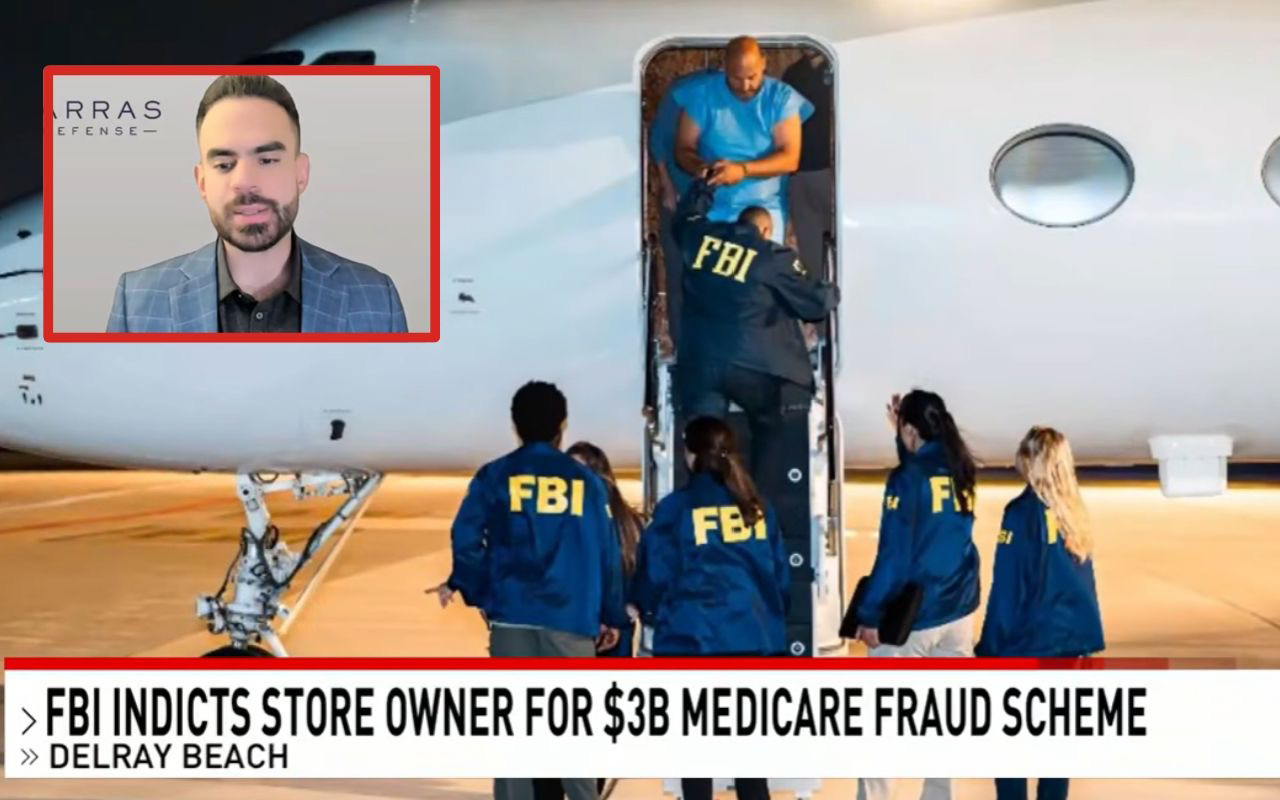
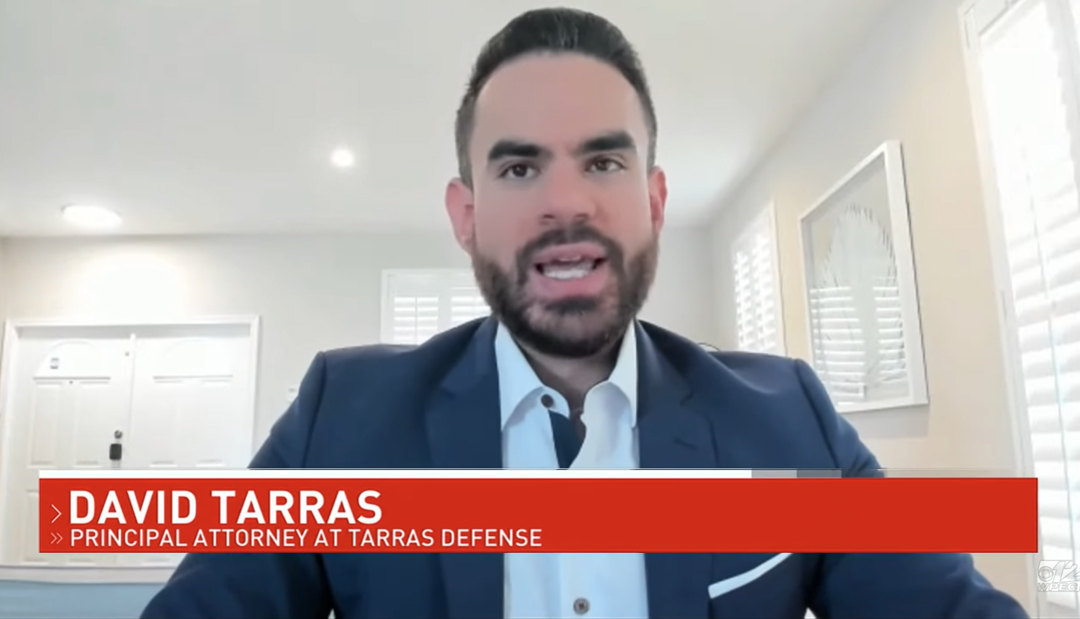
David Tarras Discusses Alleged $3.7B Medicare Fraud Case With CBS12 News

Tarras Defense Founding Attorney David Tarras recently spoke with CBS12 News about a major federal health care fraud case involving an alleged $3.7 billion Medicare fraud scheme that prosecutors say operated through a Delray Beach office.

According to CBS12, federal investigators allege that the case involved fraudulent billing for durable medical equipment through Medicare. The report noted that Ibrahim Khaldoon Hilmi, who has been accused of helping orchestrate the alleged scheme, was returned to South Florida after being arrested in Turkey.

Read more

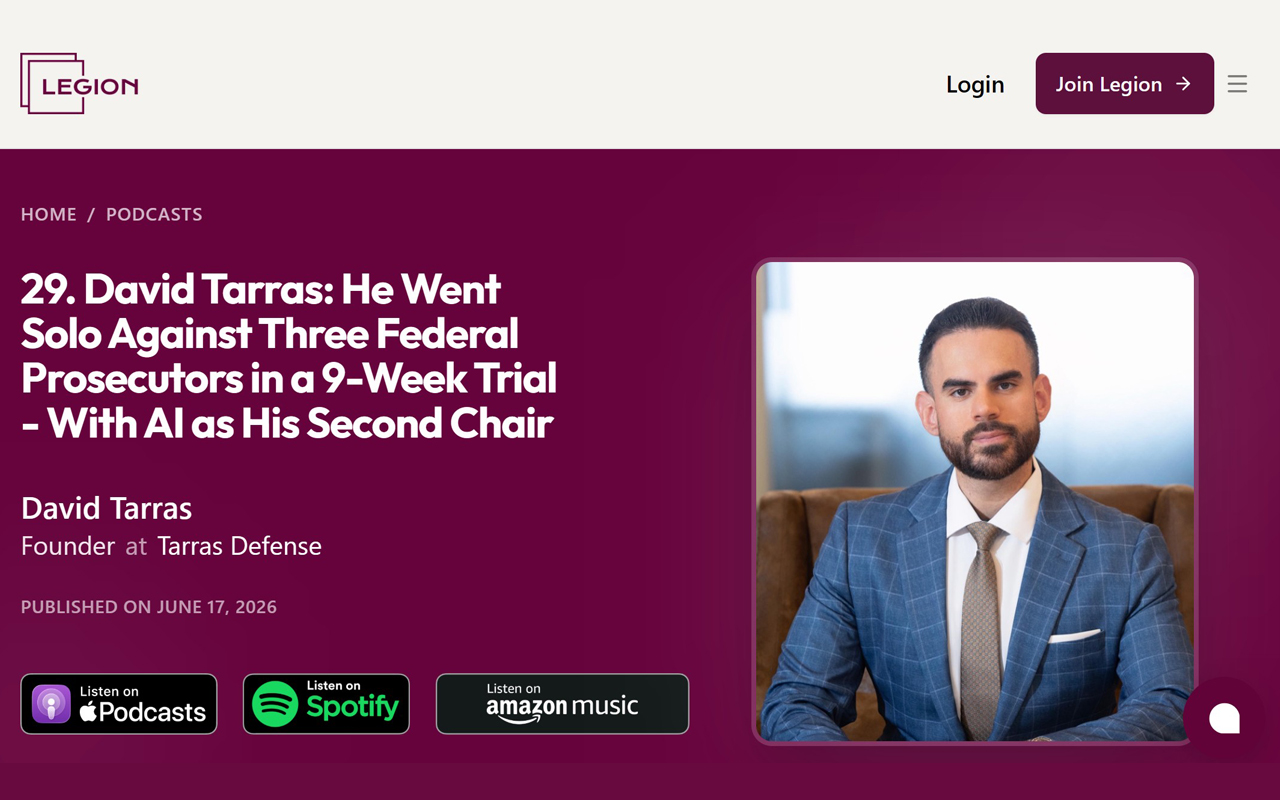
David Tarras Featured on The Litigator’s Path Podcast to Discuss AI, Trial Strategy, and Federal Criminal Defense

Tarras Defense founder David Tarras was recently featured on The Litigator’s Path podcast for a conversation about federal trial practice, artificial intelligence, and what it takes to defend a complex criminal case under extraordinary pressure.

In the episode, Tarras discusses his experience trying a 9-week federal fraud case as solo trial counsel against a government prosecution team that included three federal prosecutors, agents, and support staff. During trial, Tarras used AI as a litigation support tool to help process large volumes of overnight Jencks material, organize witness inconsistencies, draft responsive motions, and prepare demonstratives while continuing to handle every strategic and courtroom decision himself.

Read more

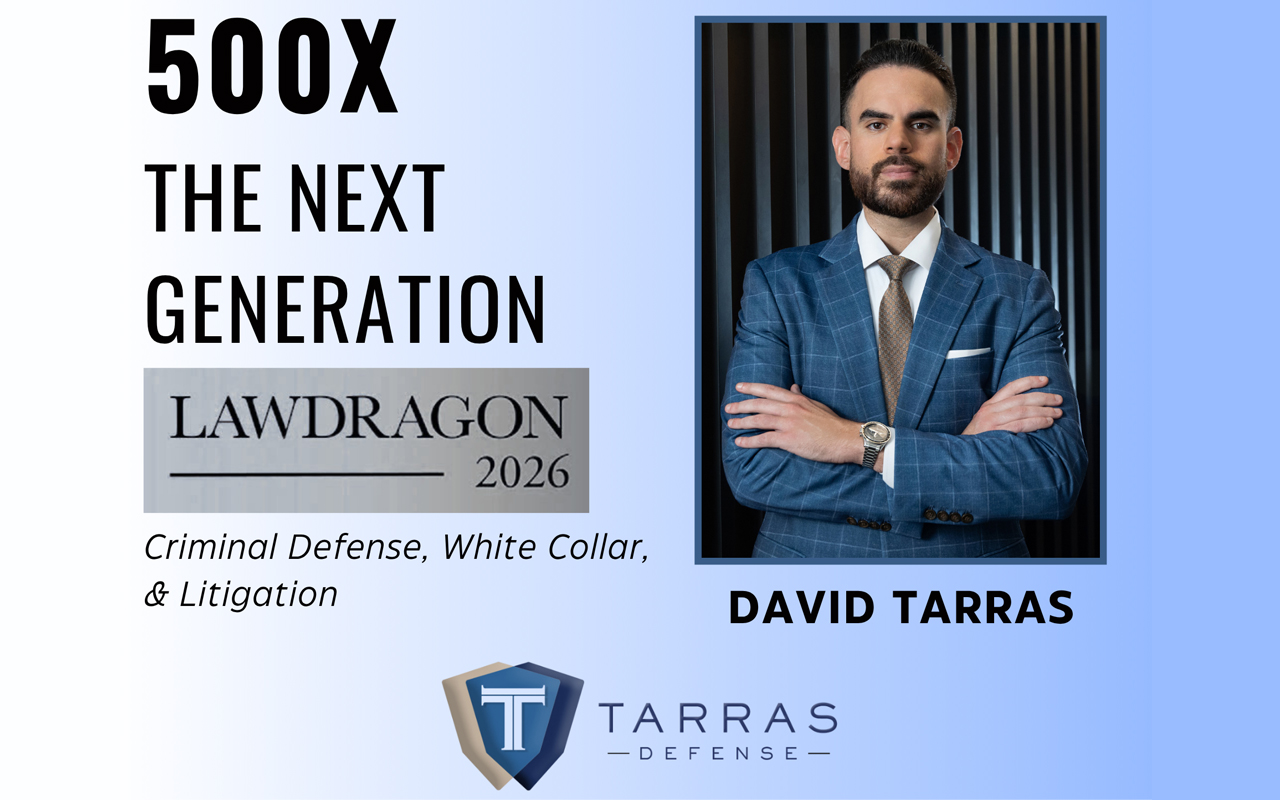
David Tarras Named to 2026 Lawdragon 500 X – The Next Generation

Tarras Defense is proud to share that founding attorney David Tarras has been selected to the 2026 Lawdragon 500 X – The Next Generation for the second consecutive year.

The annual guide recognizes lawyers who are helping shape the future of the legal profession through their work, leadership, and impact. The 2026 edition includes attorneys from across the country who are making significant contributions in their respective practice areas.

Read more

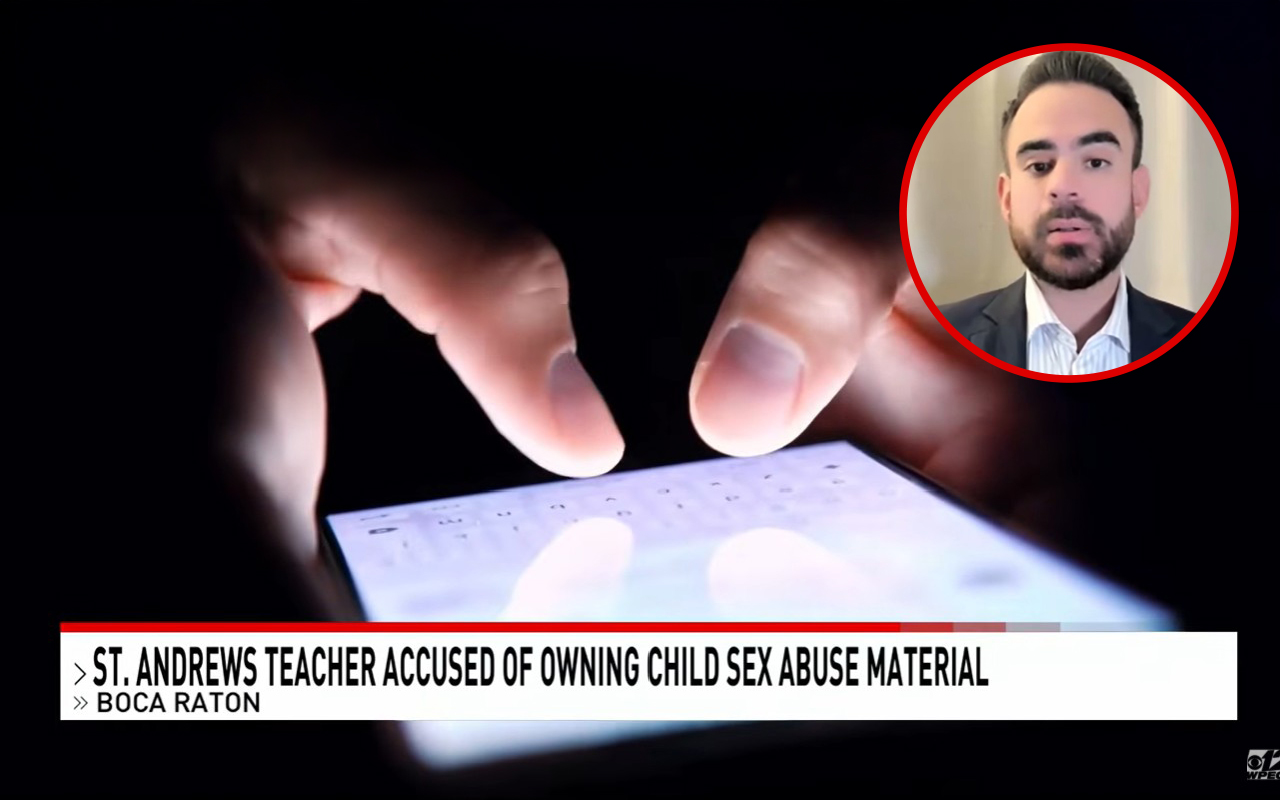
David Tarras Discusses Encrypted Messaging Apps and Federal Criminal Investigations on CBS12 News

Tarras Defense founder David Tarras recently appeared on CBS12 News (WPEC) to discuss a federal criminal case involving allegations that an encrypted messaging application was used to transmit and receive child sexual abuse material.

The case highlights a growing challenge in federal criminal investigations: the use of encrypted communications platforms and emerging technology. As messaging applications become more sophisticated, federal law enforcement agencies are devoting significant resources to understanding how these platforms operate, how digital evidence can be obtained, and how criminal activity conducted through encrypted channels can be investigated.

Read more

Tarras Defense Secures Major Sentencing Variance in National Healthcare Fraud Prosecution

Tarras Defense secured a significant sentencing result this week in a major federal healthcare fraud prosecution involving allegations tied to cancer genetic testing and more than $124 million in intended loss.

Founding attorney David Tarras represented the client for nearly seven years through multiple federal investigations, parallel proceedings, and indictments in two separate federal districts. The government identified the client as the number two participant in the alleged conspiracy and sought a sentence driven by an advisory guideline range of 151 months.

Read more

David Tarras Named “On the Rise” Honoree in 2026 Florida Legal Awards

Tarras Defense is pleased to share that founding attorney David Tarras has been named an “On the Rise” honoree in the 2026 Florida Legal Awards, presented by Daily Business Review and Law.com.

The “On the Rise” recognition highlights attorneys under 40 whose work is shaping the future of the legal profession. Tarras’s selection reflects his growing impact in complex white-collar defense and government investigations, as well as the strength of the practice he has built since launching Tarras Defense in 2025.

Read more

David Tarras Publishes Law360 Article on Federal Fraud Enforcement and Sentencing Trends

Tarras Defense founding attorney David Tarras has published a new article in Law360 examining a significant shift in federal fraud enforcement and sentencing policy.

In Fraud Enforcement, Sentencing Face Unusual Convergence, Tarras analyzes how the federal government’s expansion of fraud investigations is unfolding alongside proposed changes to the U.S. Sentencing Guidelines that may reduce sentencing exposure in many white collar cases.

Read more

David Tarras Provides Criminal Defense Analysis on CBS12 News Regarding Martin County Case

Tarras Defense founding attorney David Tarras was recently interviewed by WPEC-TV CBS12 News regarding a criminal case in Martin County that has generated significant public attention.

When incidents like this quickly become the subject of widespread media coverage, the public conversation often moves ahead of the legal process. Criminal cases move through a defined set of procedures that determine what evidence may be presented, what charges are appropriate, and how the case will ultimately be resolved in court.

Read more

Stablecoin Regulation and Federal Enforcement: New Challenges for Digital Asset Oversight – Bloomberg Law

Bloomberg law

Stablecoin Oversight and the Limits of Regulatory Clarity

Stablecoins have rapidly moved from a niche digital asset into a central component of the global cryptocurrency ecosystem. Their growing role in payments, liquidity management, and cross-border transactions has drawn increasing attention from lawmakers and enforcement authorities.

In a recent article for Bloomberg Law, Tarras Defense founder David Tarras examines how the emerging regulatory framework for stablecoins may shape future investigations involving fraud, sanctions evasion, and large-scale cryptocurrency laundering.

While new legislation provides structure for the market, Tarras explains that statutory clarity does not eliminate enforcement risk.

Read more

David Tarras Analyzes Supreme Court Ruling Limiting Federal Charge Stacking

Law 360 Double Jeopardy

The U.S. Supreme Court’s recent unanimous decision in Barrett v. United States has important implications for federal criminal prosecutions and the limits of charge stacking.

In a new Law360 article, David Tarras examines how the Court reaffirmed core double jeopardy principles and rejected the practice of layering overlapping firearm charges arising from a single act. While the ruling focused on specific federal statutes, its reasoning reaches much further, reinforcing constitutional limits on cumulative convictions and prosecutorial leverage.

The decision arrives at a time of renewed emphasis on aggressive federal charging practices. As the Court made clear, overlapping statutes present prosecutors with a choice, not an invitation to stack charges.

Read article here.

What’s Next in Nicolás Maduro’s Case?

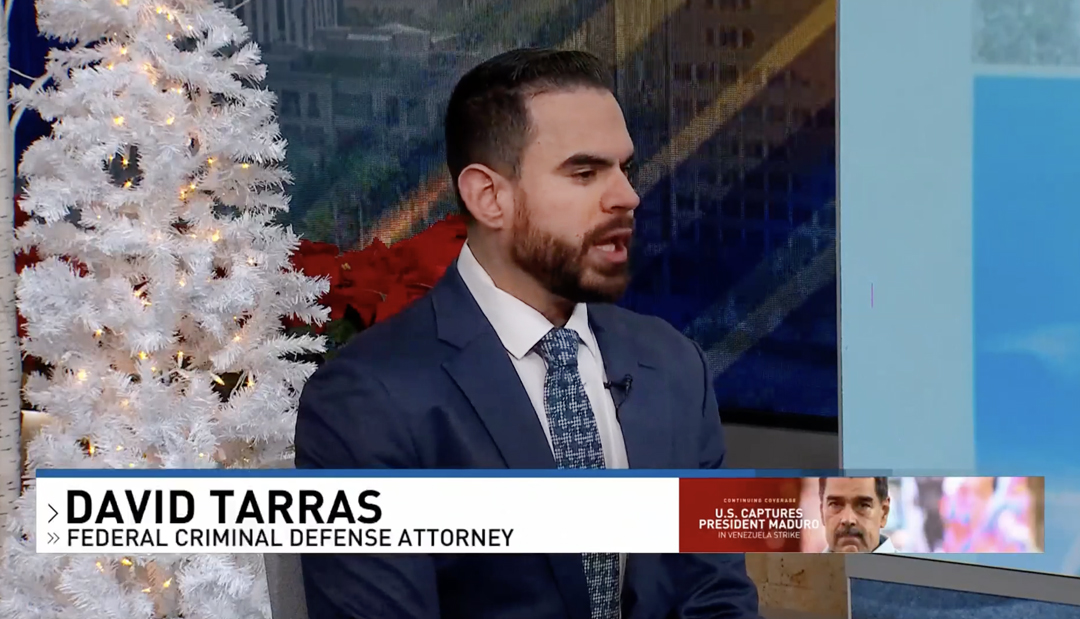
David Tarras was live in studio with WPEC-TV CBS12 News today to discuss what comes next as Nicolás Maduro is set to make his first appearance in federal court on narcoterrorism charges.

As David put it, this is “truly an unprecedented situation.” The initial proceedings will include the formal reading of charges and advisement of rights, with significant litigation expected over head of state immunity and other legal challenges tied to how Maduro was brought to the United States.

Link to the full CBS12 segment.

Florida Lawmakers React to U.S. Airstrikes, Capture of Venezuela’s Nicolás Maduro

Attorney David Tarras, commentary on Maduro case

David Tarras spoke with CBS 12 on the federal indictment involving Venezuelan President Nicolás Maduro.

Cases like this raise complex legal issues that go beyond the headlines, including jurisdiction, sovereign immunity, and how U.S. prosecutors pursue international narcotics and national security cases.

Watch the full segment.

Where Crypto Mixing Enforcement Is Headed From Here

Law360 - The Future of Crypto Enforcement

Law360 published a new article by founding attorney, David Tarras, examining where crypto mixing enforcement is headed and what the Tornado Cash verdict reveals about the DOJ’s evolving priorities.

The piece outlines the shift away from charging technical violations and toward cases that turn on intent, knowledge, and post knowledge conduct. It also highlights the government’s continued focus on national security, large scale fraud, and the aggressive use of forfeiture in digital asset cases.

For lawyers, compliance officers, and anyone advising clients in the crypto space, this analysis offers a clear look at the enforcement trends that will shape the next chapter of digital asset prosecutions.

Read the full article here.

Wound Care Fraud Investigations: What Healthcare Providers Need to Know

Law 360 Wound Care Fraud

Law360 Article published in collaboration with Jay McCormack, Partner at Verrill Dana LLP on October 29, 2025

The DOJ’s Expanding Focus on Wound Care Fraud

Federal enforcement agencies are intensifying their focus on Medicare and Medicaid billing for skin substitutes and amniotic wound care grafts — a sector that has seen explosive growth and mounting abuse. In 2025, the Department of Justice (DOJ) announced the largest healthcare fraud takedown in history, charging more than 300 defendants in schemes involving more than $14 billion in intended losses.

Read more

David Tarras selected for 2025 Lawdragon 500 X – The Next Generation guide

LawDragon - Next Generation

Founder David Tarras has been selected for the 2025 Lawdragon 500 X – The Next Generation guide — a national recognition of lawyers shaping the future of legal practice.

David’s inclusion reflects more than results. It speaks to the strategic approach he brings to every federal defense matter and his contributions to the evolution of the criminal bar.

At Tarras Defense, we focus on what’s next: emerging technologies, regulatory shifts, and the increasing complexity of federal enforcement.

5 Years In, COVID-19 Fraud Enforcement Landscape Is Shifting

Law360 Covid 19 Fraud Enforcement

When Congress passed the Coronavirus Aid, Relief and Economic Security Act in March 2020, it put more than $2 trillion into the economy almost overnight.

The money came in many forms: Paycheck Protection Program loans for small businesses, Economic Injury Disaster Loan program working capital loans, Provider Relief Fund payments to healthcare systems and payroll support for airlines. The goal was simple: Keep businesses afloat and workers employed during lockdowns.

Read more

NBA Sports Betting Indictment: What Federal Charges Really Mean

David Tarras commentary on NBA gambling.

Attorney David Tarras provides legal insight for CBS12 News

When the Department of Justice brings federal charges tied to sports betting or gambling, the implications go far beyond the game.

In the recent case involving NBA player Terry Rozier and others accused in a sports betting conspiracy, CBS12 News turned to David Tarras for expert legal analysis on how these cases unfold and what defendants can expect as the investigation continues.

Watch David’s full commentary here.

Read more